Heart Attack Warning Signs

Someone in the U.S. suffers a heart attack every 40 seconds according to the Centers for Disease Control and Prevention (CDC), but a quick emergency response can help save lives.
DaMarcus Baymon, MD, a Mass General Brigham emergency medicine doctor, explains what to do if you think someone is having a heart attack. Dr. Baymon cares for patients at Brigham and Women’s Hospital main campus and Brigham and Women’s Faulkner Hospital.
What are signs and symptoms of a heart attack?
If you think someone is showing signs of a heart attack, call 911 right away.
“Many heart attacks are very recognizable from their symptoms, but in fact, nearly half of people who have a heart attack don’t realize it at the time,” says Dr. Baymon.
Heart attack signs and symptoms in both men and women can include:
- Chest pain or pressure
- Shortness of breath
- Cold sweat at rest
- Weakness or light-headedness
- Pain or discomfort in the neck, back, jaw, arms, or shoulders
For women, symptoms can also include:
- Nausea
- Abdominal pain and cramping
What to do if having a heart attack
After you’ve called 911, “Emergency medication can do a lot to reduce damage to the heart,” says Dr. Baymon.
Ask the person to chew and swallow an aspirin immediately, as long as they aren’t allergic to it. This can help thin the blood.
If the person already has a heart condition and has been prescribed nitroglycerin by their cardiologist, they should take the medication right away. Nitroglycerin treats chest pain in people with coronary artery disease. It works by relaxing blood vessels, which reduces the workload of the heart.
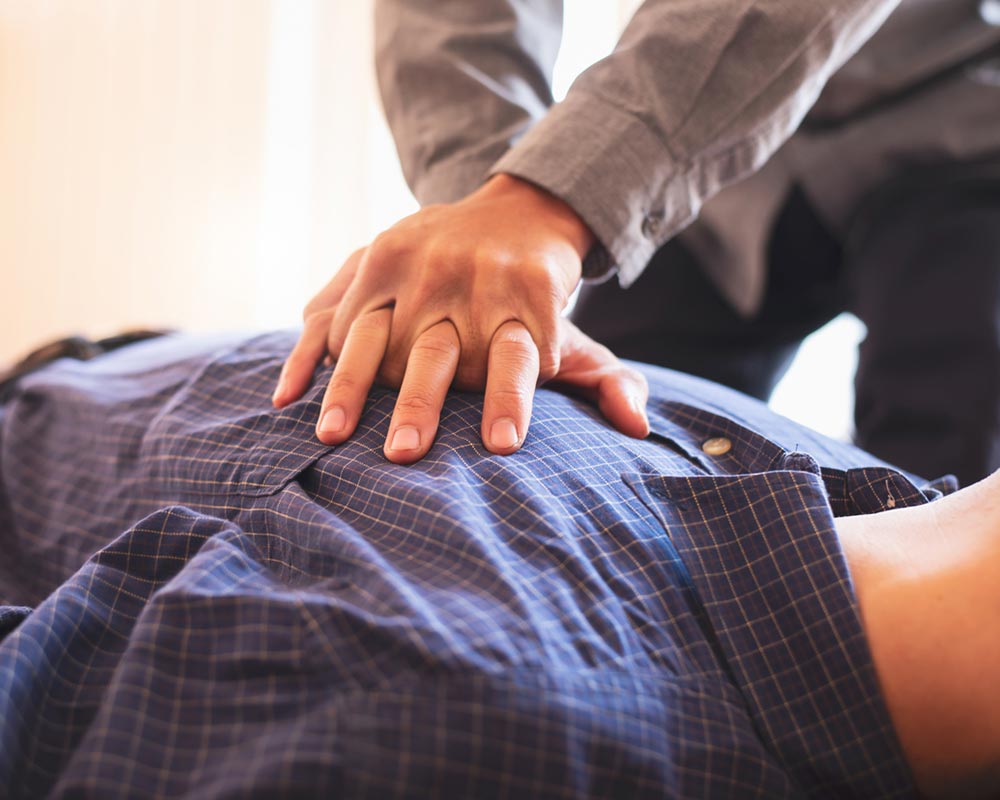
If the person isn’t breathing or doesn’t have a pulse, start performing CPR and use an automated external defibrillator (AED) if one’s available nearby.
How to do CPR
CPR chest compressions help keep blood flowing to the brain and vital organs. It can increase the chances of survival.
To perform CPR:
- Place 1 hand over the other and press firmly in the middle of the person’s chest with the heel of your hand.
- Do 2 compressions per second, or 100 to 120 compressions per minute.
- People with CPR training can give 2 rescue breaths every 15 or 20 seconds.
If you’ve called 911, the emergency dispatcher also can give you instructions over the phone.
Heart & Vascular Care
Many heart attacks are very recognizable from their symptoms, but in fact, nearly half of people who have a heart attack don’t realize it at the time.
DaMarcus Baymon, MD
- Emergency Medicine Doctor
- Mass General Brigham