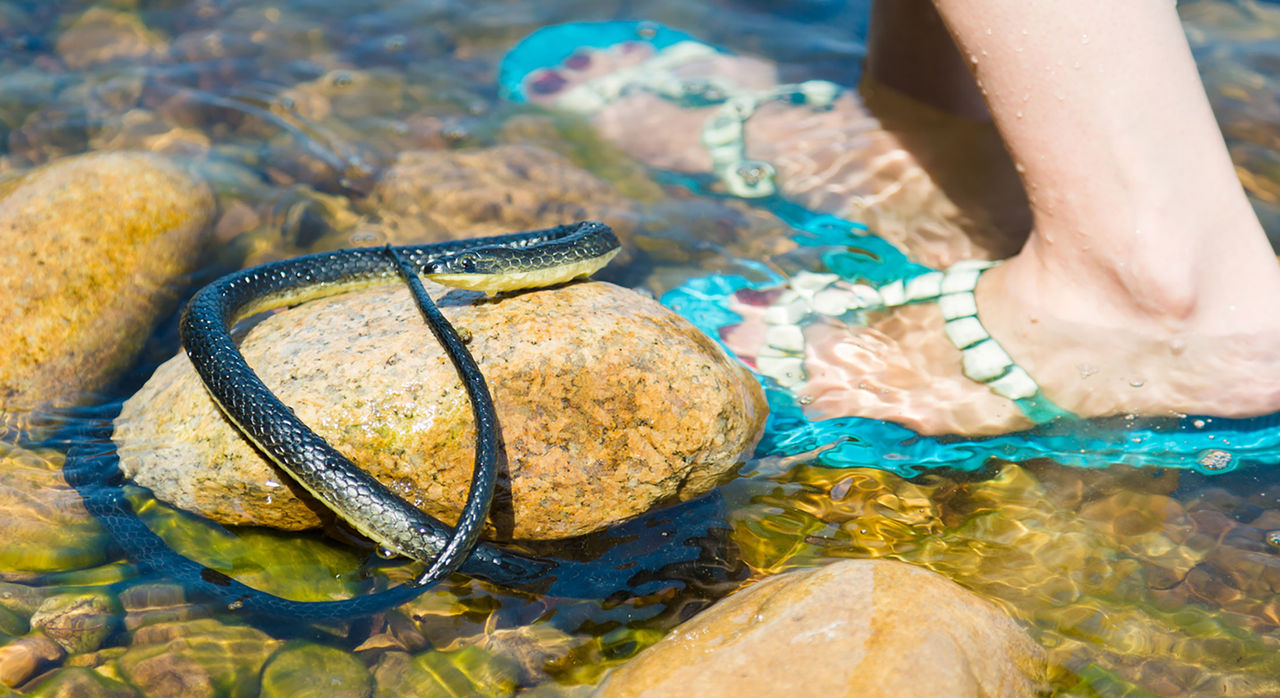
Snake bites can be scary. They often occur far from the hospital, in the wilderness or in remote settings. You may encounter snakes on a hike, running on trails, or while camping in the woods.
Regan Marsh, MD, MPH, a Mass General Brigham emergency medicine doctor, provides helpful tips if you or a companion experience a snake bite.
What to do when a snake bites
Not all snakes are venomous. But if someone is bitten by a snake, you’ll want to act fast, especially if it’s a child or an older person. Try to keep calm and follow these steps if you’re faced with this emergency.
Step 1: Get to an emergency room as soon as possible for snake bite care.
If you can safely and without delay get to the ER, take a photo of the snake. Time is critical. If it’s needed, antivenom treatment should be given by the doctors as soon as possible.
Step 2: Call 9-1-1 immediately and check for symptoms.
Tell the dispatcher if you or a companion experience:
- Nausea
- Vomiting
- Dizziness or severe weakness
- Blurred vision
- Rapid heart rate or weak pulse
- Difficulty breathing
- Significant swelling
Step 3: Comfort, dress, and document.
While you wait for emergency services, here’s what you can do:
- Remove jewelry, watches, and constricting athletic gear or clothing.
- Clean the bite with soap and water.
- Cover with a clean, dry bandage.
- Mark the edge of the bite to track any changes or growth in redness or swelling.
Stay safe after a snake bite.
You may have heard some tips for snake bite care that can be harmful.
Do not:
- Touch or handle a living or dead venomous snake.
- Apply a tourniquet.
- Attempt to cut or suck out poison.
- Give the bitten person alcohol or painkillers such as aspirin or naproxen (acetaminophen is okay).
- Apply ice to the bite.
- Immerse the bite in water.
***************************************************************
Placeholder for YouTube Embed. Original Embed Link : https://www.youtube.com/embed/_H8ROJD1oIo?rel=0&showinfo=0&enablejsapi=1&origin=https%3A%2F%2Fwww.massgeneralbrigham.org.
***************************************************************
***************************************************************
Antivenom
Doctors use antivenom (sometimes called antivenin) to treat bites. They’re often developed from specific snake bite venoms, so knowing the species of snake that bit you can be extremely valuable information.
Types of venomous snake bites
Venomous snakes are found in many locations and habitats, from mountains to desert to water environments. Common venomous snakes in the United States include:
Play it safe with quick snake bite care.
As with any emergency situation, the key to a good outcome is to get medical attention as quickly as you can. Though most snake bites are usually minor first aid concerns, it’s good to know what to do if bitten. Play it safe and call 9-1-1 or if possible, head to an emergency room or doctor nearby.