When to Get Your Flu Shot

The Centers for Disease Control and Prevention (CDC) recommends an annual flu vaccine for anyone aged 6 months or older, with very few exceptions. The flu can cause serious illness, hospitalization, and even death. The flu vaccine reduces the risk of those outcomes. Not only does the flu shot protect you from getting sick, it also helps protect the people in your community.
“Patients who are older, pregnant, immunocompromised, and very young children are especially at risk of serious outcomes from the flu. By getting the flu vaccines, individuals can reduce their risk of severe illness should they get the flu, and protect those around them,” says Erica S. Shenoy, MD, PhD, chief of Infection Control at Mass General Brigham and an infectious diseases doctor at Massachusetts General Hospital.
Learn more about when to get the flu shot to stay healthy this flu season and get answers to other common flu vaccine questions.
What is the best time to get a flu shot?
Flu season usually runs from October to May, with the season typically peaking between the end of December and end of February.
“The CDC recommends getting the flu vaccine in September or October to give you protection for the entirety of the flu season,” Dr. Shenoy explains. “During last season, 2024-2025, flu started ramping up in mid-November and peaked in February. It was a high-severity flu season in terms of outpatient visits, hospitalizations, and deaths—the most severe season since 2017.”
Once you get the flu vaccine, it takes your body about 2 weeks to build a complete immune response.
For kids, aged 6 months to 8 years, you need to plan ahead. That’s because kids in this age group may need 2 doses, 4 weeks apart, depending upon prior influenza vaccination.
“It can get a little complicated, so even though I’m an infectious diseases doctor, when I’m being ‘mom,’ I look up the latest recommendations each year,” says Dr. Shenoy.
To learn more about dosing for this age group, you can view the CDC's recommendations.

Is it too late to get a flu shot?
No. The flu can spread for many months and getting a flu shot later in the season still provides many benefits. It reduces the risk of severe illness, hospitalization, and death.
Flu shot efficacy
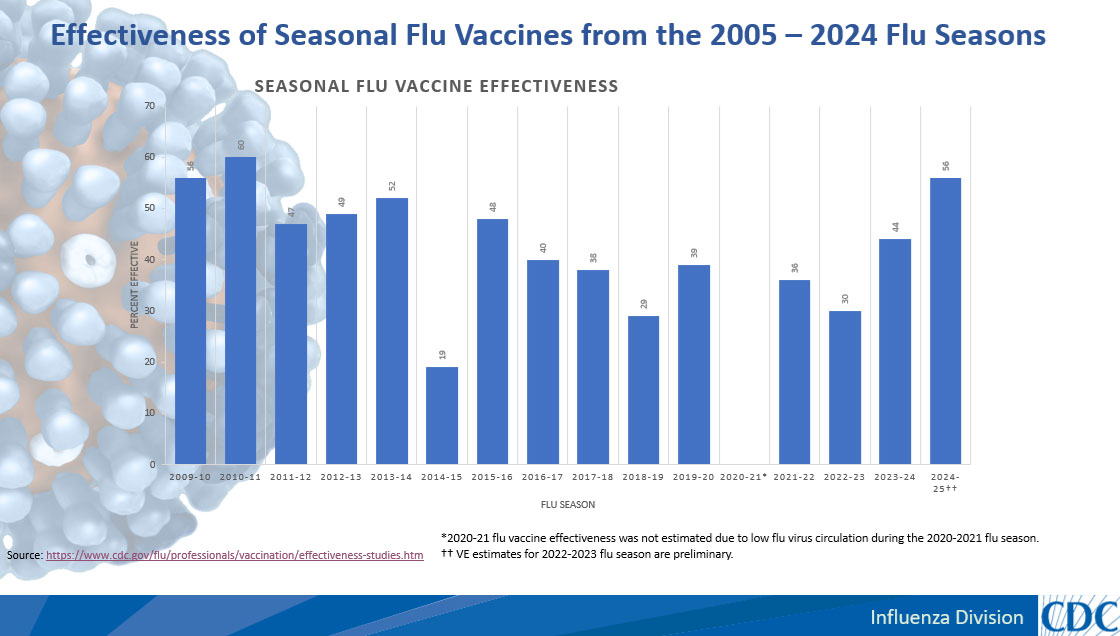
Annual flu shots are very effective and each year scientists reformulate them to provide protection against the most likely circulating strains of the virus. Some people who get the flu vaccine, but still come down with the flu, might think that the vaccine doesn’t work well.
“That’s actually not true,” says Dr. Shenoy. “Study after study has shown that people who get the vaccine and become infected with influenza have less severe disease. In fact, the effectiveness of the the influenza vaccine during the 2024-2025 season was 54% for preventing illness requiring a visit to the emergency department or other outpatient setting, and 71% for preventing symptomatic illness among children and adolescents. In September 2025, at the conclusion of the Southern Hemisphere’s flu season, the flu vaccine was reported to have reduced influenza-associated outpatient visits by 50.5% and hospitalization by 49%.”
How long is the annual flu shot effective?
The immunity from your flu shot should last for the full duration of the flu season. “You are protected for the current flu season, but each year, you’ll need to get your shot to stay protected,” explains Dr. Shenoy.
Learn more about the flu shot and other vaccines
By getting the flu vaccines, individuals can reduce their risk of severe illness should they get the flu, and protect those around them.
Erica S. Shenoy, MD, PhD
- Chief of Infection Control
- Mass General Brigham